Tennis Elbow, Overuse, and Getting Back to the Activities You Love
At RegenClinic, we’re seeing more and more injuries that come from living actively.
Not dramatic accidents. Not one-time mishaps. But the kind of injuries that appear when someone is deeply engaged in the things they love.
That’s what makes tennis elbow so frustrating.
If you play tennis, pickleball, golf, or do repetitive work with your hands and arms, you may recognize the experience. Often the pain appears when everything else is going well. Your swing feels strong, your timing is good, and you want to keep playing.
Then the outside of your elbow begins to ache.
For active people, injuries like this affect more than the body. They interrupt routines, hobbies, sports, and social time. A game of tennis, for example, is both physical exercise and a way to connect with friends.
Helping someone recover from tennis elbow means more than reducing pain. It means helping them return to the activities that bring energy and meaning to their lives.
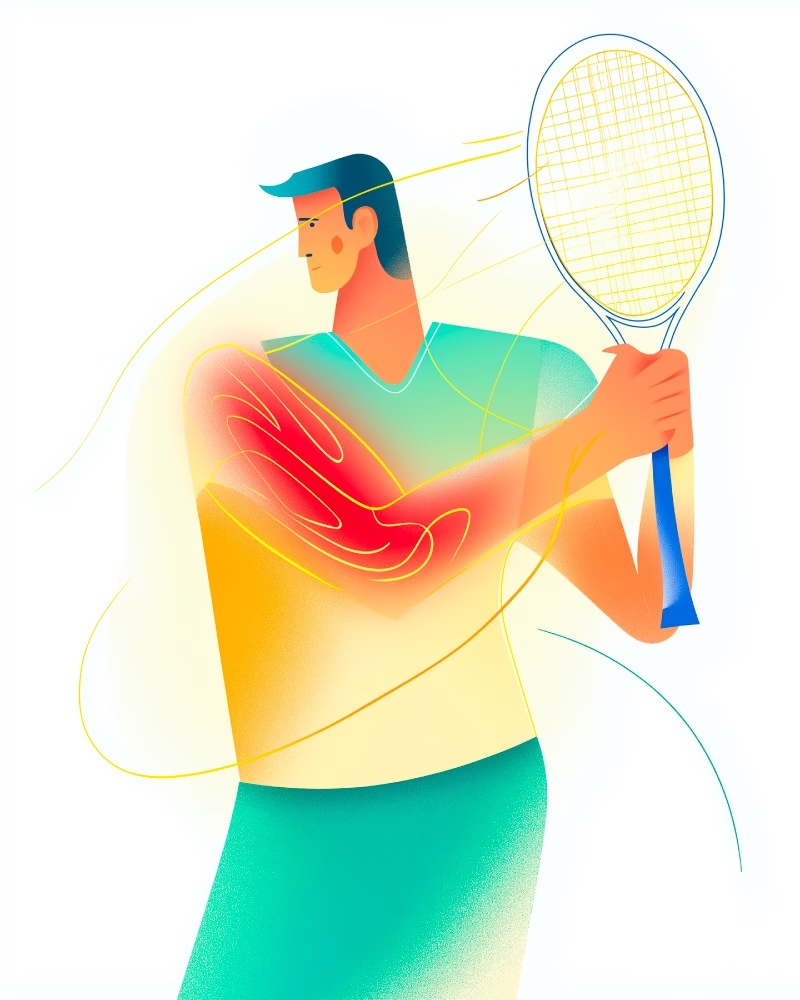
What Tennis Elbow Actually Is
Tennis elbow, also called lateral epicondylitis, occurs when the tendons of the forearm muscles become irritated where they attach to the bony bump on the outside of the elbow.
This condition is typically caused by repetitive wrist and arm movements. Despite the name, most people who develop tennis elbow do not play tennis.
Repeated motions can create tiny tears in the tendon tissue. Over time, these micro-injuries can lead to inflammation and tendon degeneration, producing pain that may radiate down the forearm toward the wrist.
The pain can also interfere with everyday activities such as:
• gripping objects
• turning a doorknob
• shaking hands
• holding a cup or lifting small items
In other words, what begins as a sports injury can quickly become a quality-of-life issue.
Why Overuse Injuries Are So Frustrating
One of the most difficult parts of tennis elbow is that it often develops precisely because someone is active and engaged. It is an injury that grows from repetition and enthusiasm.
As tennis players ourselves at Regen, we know how frustrating this can be. Often, tennis elbow appears when you’re playing some of your best tennis. Your timing is good. Your confidence is high. The last thing you want to do is stop.
But continuing to push through the pain can prolong the injury.
That’s why having a treatment approach that helps calm inflammation and support recovery can be so valuable. It allows people to recover more quickly and return to their sport safely.
What the Research Says About Laser Therapy for Tennis Elbow
A systematic review and meta-analysis examining red light therapy for lateral elbow tendinopathy analyzed 18 randomized placebo-controlled trials, with 13 studies and 730 patients included in the meta-analysis.
The researchers found significant improvements in pain relief and overall improvement compared with placebo treatments.
The meta-analysis reported a weighted mean difference in pain reduction of approximately 10.2 mm on a 100 mm pain scale compared with placebo.
The strongest results were observed in trials where the tendon insertion at the lateral epicondyle was treated directly with laser therapy. In those studies, pain reduction improved by 17.2 mm on the pain scale.
Importantly, the review also found improved pain-free grip strength among patients receiving laser therapy. Grip strength is one of the key functional measures affected by tennis elbow.
No serious side effects were reported in the included trials.
The authors also noted that laser therapy may work particularly well when combined with exercise and rehabilitation programs, potentially reducing recovery time by several weeks.
These findings suggest that red light therapy is a useful tool for reducing pain and supporting recovery in people with tennis elbow.
(Bjordal et al., 2008)
What Treatment Looks Like at RegenClinic
The THOR protocol for lateral epicondylitis is structured and practical.
For acute cases, treatment is recommended as soon as possible after symptom onset, daily for 5 days if possible, followed by up to three times a week for 3 to 5 weeks, then spacing out according to symptoms. For chronic cases, the protocol recommends twice weekly treatment for a minimum of 6 weeks.
The treatment plan targets several layers of the problem:
• Axillary and ante-cubital lymphatics to reduce inflammation and oedema and improve local blood circulation
• The lateral epicondyle itself, especially the postero-inferior aspect of the epicondyle, along with any inflamed forearm musculature, to support tissue healing and reduce local inflammation and bruising
• Ipsilateral nerve root exits and spinous processes from C5-T2 for analgesia
• Local associated myofascial trigger or tender points in the forearm and surrounding musculature
That means the protocol does not just chase pain. It addresses circulation, tissue healing, nerve-related pain, and compensatory muscle tension.
🌿 Returning to What You Love
Tennis elbow may begin as a small irritation, but for active people it can quickly take away something important. Movement is not just exercise. It’s connection, community, and joy.
Helping people recover from injuries like tennis elbow means helping them return to the sports, routines, and friendships that make life vibrant.
At RegenClinic, that’s always our goal.
Call or text us at 250-208-4218
Email: hello@regenclinic.ca