The First Week After a Fracture Matters More Than You Think
When a bone breaks, most people think about the long road to recovery. Weeks. Months. Rehabilitation. But what many don’t realize is that the first week after a fracture may be one of the most important phases of healing. It’s when pain is highest, movement is most limited, and your ability to stay engaged in recovery is most at risk.
A recent 2026 systematic review and meta-analysis looked at how red light therapy (photobiomodulation) affects fracture healing—particularly pain relief and early functional recovery.
What stood out wasn’t just healing. It was timing. Across multiple studies, patients receiving red light therapy experienced significantly lower pain in the first week after a fracture, along with early improvements in function, such as grip strength in upper limb injuries (Wang et al., 2026).
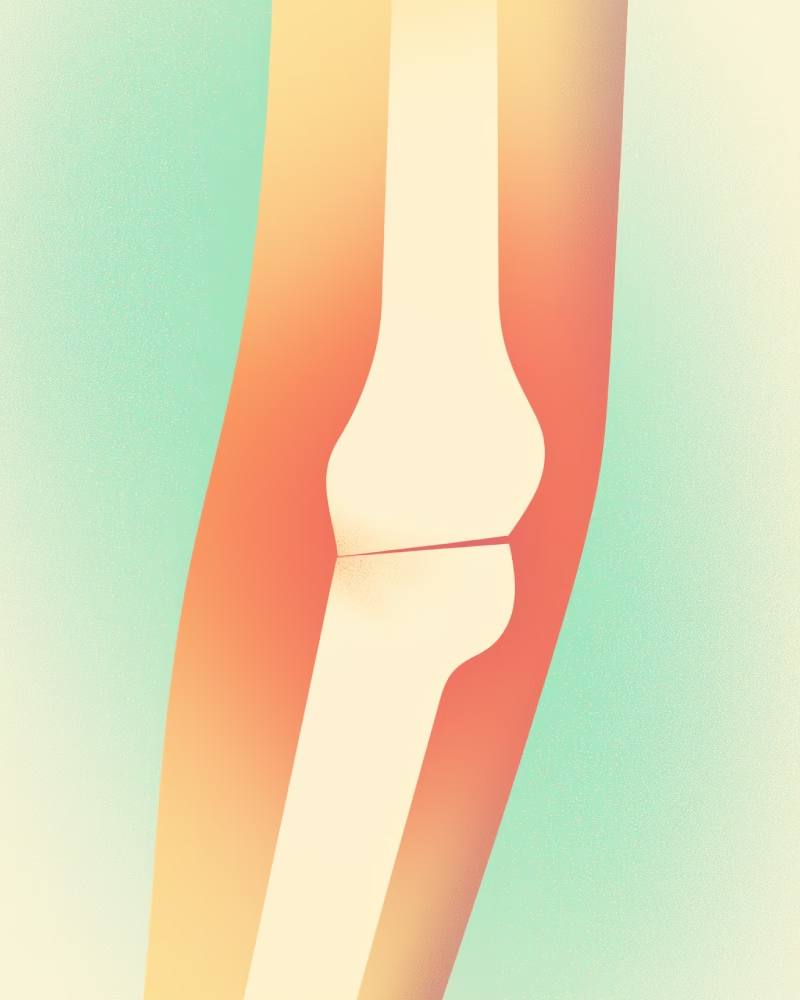
The early phase of fracture recovery sets the tone for everything that follows. If pain is too high:
- Movement decreases
- Rehabilitation is delayed
- Muscles weaken
- Confidence drops
But when pain is more manageable, people are more likely to:
- Stay mobile within safe limits
- Engage in physiotherapy
- Maintain strength and coordination
This is where supportive therapies can make a meaningful difference.
How Red Light Therapy Works
Red light therapy works at a cellular level. Light is absorbed by an enzyme in your mitochondria called cytochrome c oxidase, which helps increase cellular energy (ATP production).This process influences:
- Inflammation
- Blood flow
- Cellular repair signaling
In the context of a bone fracture, this creates a better healing environment—especially in the early stages when swelling and inflammation are at their peak.
What a Typical Treatment Might Look Like
While every fracture is different, red light therapy for fractures often follows a general pattern:
• Starts as early as possible after the injury
• More frequent at the beginning (sometimes daily, then a few times per week)
• Short, targeted sessions
• Light applied directly over the fracture and surrounding tissue
• Focus on reducing inflammation and supporting early healing
• Additional areas may be treated, including:
• Lymphatic regions (to help manage swelling)
• Muscle tension or trigger points (to reduce pain)
• Treatments are spaced out over time
• Adjusted based on how your body is responding
This kind of non-invasive fracture support is typically used alongside standard medical care—not in place of it.
🌿
If you or someone close to you is recovering from a fracture, or preparing for surgery, we’d love to be part of the conversation. Adding red light therapy into your broader treatment plan will help reduce pain and shorten the recovery period, so you can get back to doing what you love faster.orth exploring.
Call or text us at 250-208-4218
Email: hello@regenclinic.ca