What Is Pain, Really? A More Complete Way to Think About Pain Relief
Pain can be sharp and sudden. Low and dull. Burning. Aching. Needling. Throbbing. Persistent. Most of us know pain by the particular way it arrives, but have you ever stopped to wonder what pain actually is? Not simply which part of the body hurts, but what happens between a change in your cells and that unmistakable message from your brain: something is wrong here.
A recent scientific review says that at its simplest, pain begins as a kind of conversation (Cheng et al., 2021). An injury, irritation, strain, or ongoing health condition can cause cells in the body to release chemical messengers. Nearby sensory nerves may become more alert. Signals travel through peripheral nerves, move through the spinal cord, and reach the brain, where they are interpreted as pain. Along the way, inflammation, immune activity, oxidative stress, nerve sensitivity, movement patterns, sleep, and the nervous system’s overall level of alertness can all influence the experience. That is why pain can feel so different from one person, condition, or day to the next.
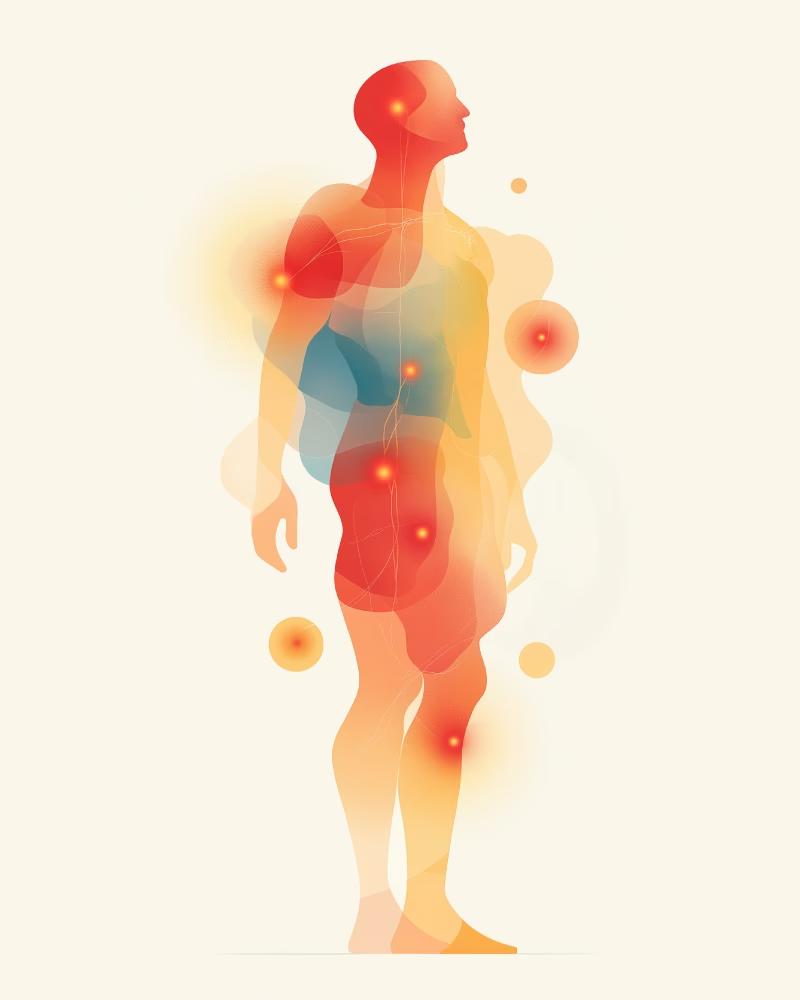
Pain Does Not Always Live Where It Hurts
A painful knee may involve the joint itself. But it can also involve local inflammation, sensitive nerve endings, changes in movement, and a pain-processing system that has been on high alert for a long time. The same is true for back pain, neuropathic pain, arthritis, post-surgical pain, and many other persistent conditions.
This does not mean that pain is imagined, but rather that pain is biological, layered, and more complex than a simple alarm coming from one sore spot. Pain and tissue damage are often related, but they are not always a perfect one-to-one match. A small injury can sometimes create a very loud pain signal. A condition that has been present for years may continue to affect the nervous system even after the original tissue has started to heal.
Red Light Therapy for Pain: What Researchers Are Studying
Pain management often works best when we look beyond the painful point itself, which is one reason researchers are studying red light therapy for pain, also known as photobiomodulation. Skin-applied red and near-infrared light therapy is being explored for its possible effects on several systems involved in pain, including:
- Inflammatory signals
- Oxidative stress
- Mitochondrial activity and cellular energy
- Local immune-cell activity
- Sensory nerve signalling
- Pain sensitivity in peripheral and central pathways
In simple terms, researchers are asking whether light can help support some of the biological systems that shape pain in the first place, which is different from asking whether light can simply switch pain off.
Photobiomodulation for pain is still an evolving area of research. Studies use different wavelengths, doses, treatment schedules, and target areas. Some of the most detailed mechanism research has been conducted in preclinical models, while human studies continue to explore where red light therapy and near-infrared light therapy may be most useful.
The details matter. The right wavelength, dose, timing, treatment area, and clinical context can all influence how light interacts with tissue.
A More Complete Approach to Pain Management
Pain care is rarely about one dramatic intervention. For many people, it may involve a combination of medical assessment, movement, rehabilitation, physiotherapy, acupuncture, sleep support, stress management, and treatments that help the body regain confidence and function over time.
Red light therapy can be part of that larger picture. At RegenClinic, we think about pain with curiosity. Where is it showing up? How long has it been there? What may be keeping the nervous system on alert? And what combination of complementary support may help the body move toward recovery?
🌿
You may feel pain in one place, but the story of why it hurts can be happening in many places at once. While red light therapy is not a replacement for medical care, diagnosis, medication, physiotherapy, or rehabilitation, the research into photobiomodulation is helping us understand why light can be a valuable tool. Being able to treat several of the biological systems involved in pain can help manage complex and chronic conditions. If you are experiencing pain and are curious to learn, please reach out.
Call or text us at 250-208-4218
Email: hello@regenclinic.ca