What Has Your Dog Quietly Stopped Doing?
Maybe your dog still greets you at the door, wags when you pick up the leash, and follows you from room to room. But something has changed.
They wait for help before climbing into the car. Their first few steps after a nap look stiff. They pause at the bottom of the stairs or turn toward home earlier during a familiar walk. These moments can be subtle. When changes happen gradually, it is easy to think that a dog is simply getting older. Sometimes, however, they are quietly adapting to discomfort.
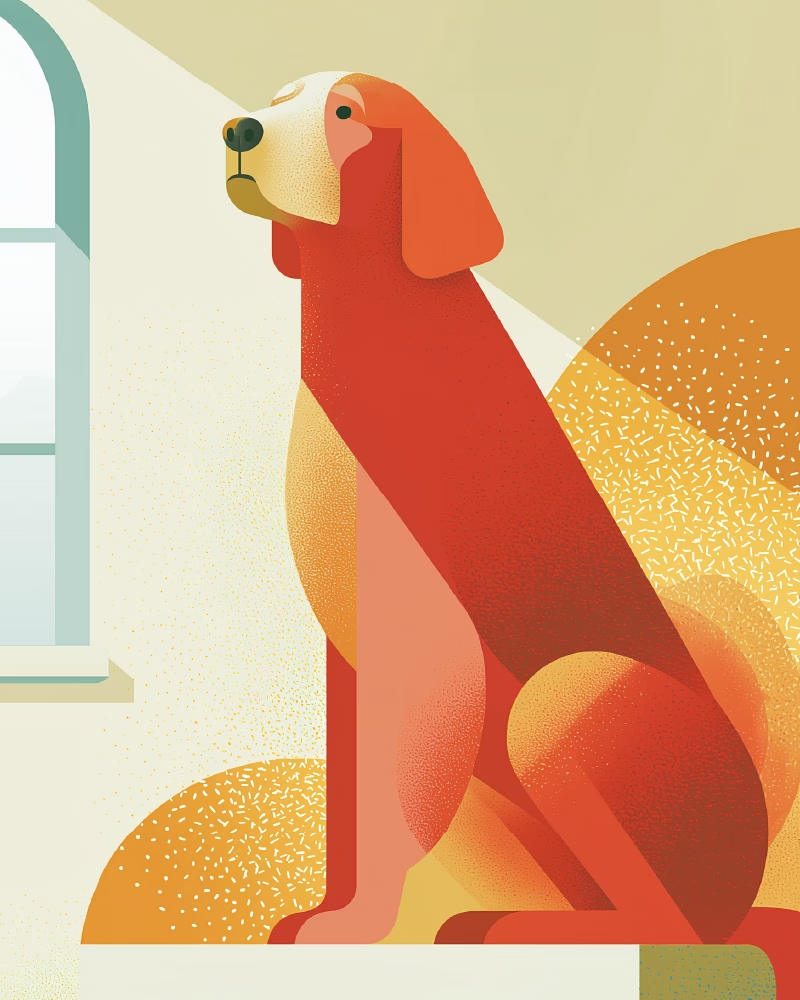
The quiet signs of arthritis in aging dogs
Arthritis is an inflammatory joint condition that can cause pain, stiffness, and reduced mobility. Although an obvious limp may be easy to recognize, joint pain in dogs can also appear through changes in behaviour and routine.
The American Animal Hospital Association recommends watching for signs such as:
- Difficulty rising or lying down
- Stiffness or changes in posture
- Restlessness while trying to get comfortable
- Less interest in walks or play
- Hesitation around stairs, cars, or furniture
- Irritability or avoidance of physical contact
These signs do not prove that a dog has arthritis. Injuries, neurological conditions, and other health concerns can cause similar changes. A veterinarian can examine your dog, rule out other causes, and determine whether arthritis may be affecting their comfort or movement.
Compare your dog with their own normal
Every dog moves differently. A twelve-year-old terrier should not be measured against a young border collie, and an aging dog does not need to move like they did as a puppy.
What matters is whether something has changed from their own normal. Rather than asking, “Can my dog still climb the stairs?” try asking: “Do the stairs look as easy as they did six months ago?”
Your dog may still complete the activity while taking more time, shifting their weight, pausing beforehand, or resting afterward. These small adaptations can be meaningful.
Other questions to consider include:
- Are regular walks becoming shorter?
- Does your dog hesitate before jumping?
- Are they less interested in games they once loved?
- Do they have trouble settling comfortably at night?
- Are they avoiding slippery surfaces?
- Do they need more time to stand after resting?
The things a dog stops doing can sometimes tell us as much as an obvious symptom.
A simple way to track senior dog mobility
Gradual changes are difficult to see when you are with your dog every day. A simple record can help. Every few weeks, take a short video of your dog standing up, walking through the house, or moving along a familiar route. Try to record the same activities from a similar position each time.
You might also make brief notes about:
- The approximate length of regular walks
- How easily your dog gets up after sleeping
- Interest in play and social interaction
- Comfort using stairs or getting into the car
- Changes in sleep, mood, or restlessness
The international consensus guidelines for canine osteoarthritis encourage caregivers and veterinary teams to consider the dog’s posture, movement, daily activities, and general wellbeing. The guidelines also recommend using videos of dogs in their home environment as part of ongoing evaluation. These records can give your veterinarian a clearer picture of what happens between appointments.
Arthritis care is rarely one-size-fits-all
Canine arthritis is usually managed rather than cured. Depending on the dog, a veterinary care plan may include medication, weight management, appropriate exercise, rehabilitation, environmental changes, and supportive treatments.
A rug placed over a slippery floor, a ramp beside the stairs, or a more supportive bed may seem like a small adjustment. For an uncomfortable dog, it can make everyday movement feel much more manageable.
The most effective plan depends on the individual animal, the severity of their condition, other health concerns, and how they respond over time. Veterinary consensus guidance therefore supports a flexible, multimodal approach with regular reassessment.
Where red light therapy for dogs may fit
Red light therapy, also called photobiomodulation, uses selected wavelengths of red and near-infrared light to influence biological activity in the treated tissue. Research into photobiomodulation for dogs with arthritis is still developing, but early clinical findings are extremely encouraging.
In a randomized placebo-controlled study involving 20 dogs with elbow osteoarthritis, photobiomodulation was associated with improvements in pain and lameness scores and lower use of anti-inflammatory medication.
A separate randomized study involving 20 dogs with bilateral hip osteoarthritis reported reduced pain and improvements in clinical measures including function, gait, and joint movement following photobiomodulation treatment.
These are small studies, so they should not be read as a promise that every dog will experience the same result. They do, however, suggest that red light therapy can have a place within a broader, veterinarian-guided arthritis plan.
At RegenClinic, laser and light therapy is available for dogs and cats to help address pain and inflammation and support mobility. Treatments are non-invasive and can be considered alongside appropriate veterinary care.
Begin by noticing
You know the rhythm of your dog’s days better than anyone. You know how quickly they once reached the door, which chair they preferred, how they climbed into the car, and how far they wanted to walk. When that rhythm begins to change, it is worth paying attention.
🌿
Begin with a veterinary conversation. When you are ready to explore whether red light therapy could offer additional support for your dog’s comfort and mobility, the RegenClinic team is here to answer your questions.
Call or text us at 250-208-4218
Email: hello@regenclinic.ca