Diabetic Ulcers: Why Some Wounds Don’t Heal, and What Research Is Starting to Change
Diabetic ulcers are one of the most challenging complications of diabetes. These aren’t just regular wounds. They are chronic wounds that don’t heal, sometimes persisting for months or even years. For many people, this leads to infection, reduced mobility, and in more severe cases, amputation.
But what’s often overlooked is why this happens—and what new research is beginning to reveal about diabetic ulcer healing.
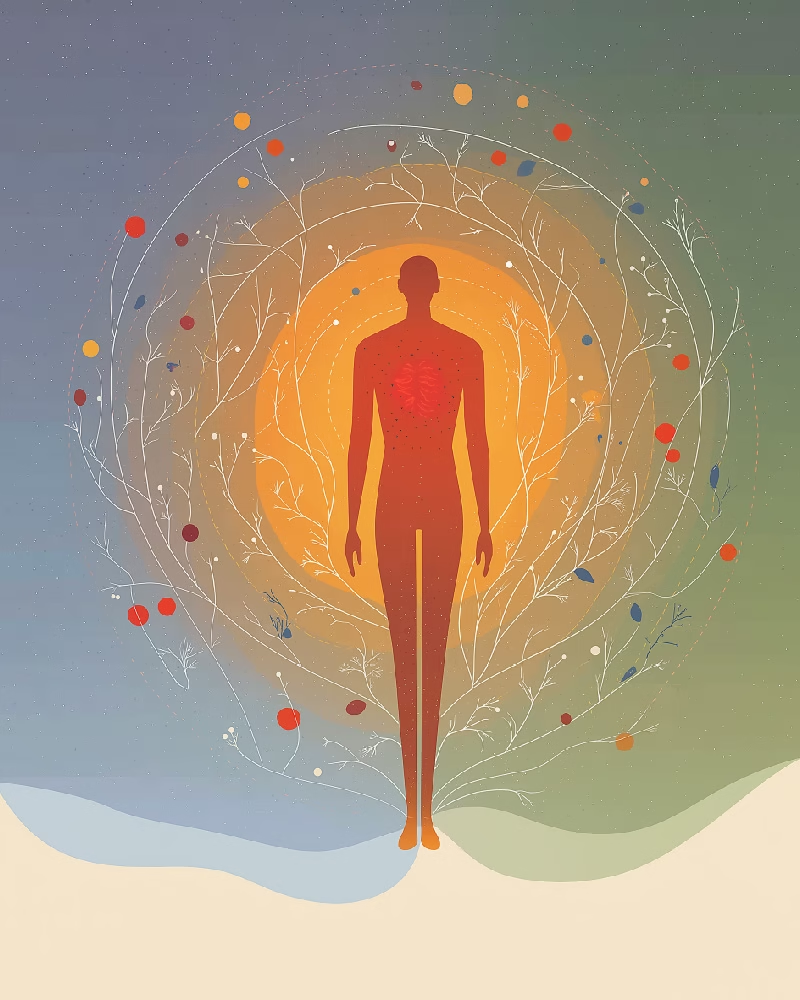
Why Some Wounds Don’t Heal
Healing a wound is an energy-intensive process. It requires:
- Healthy blood flow
- Oxygen delivery
- Cellular communication
- A balanced inflammatory response
In diabetes, many of these systems are disrupted. Circulation is reduced. Inflammation lingers longer than it should. Cells don’t receive the signals—or the energy—they need to repair tissue effectively. This creates a wound that becomes “stuck,” unable to move through the normal stages of healing.
For those familiar with red light therapy for wound healing, this pattern may sound familiar. These are exactly the systems that photobiomodulation is designed to support—circulation, inflammation, and cellular energy production.
What New Research Is Starting to Change
A recent 2026 review on photobiomodulation for diabetic wound healing explores how light-based therapies may help shift this stalled healing process. One of the most important insights is this:
Red light therapy doesn’t just help on its own. It helps create the conditions where healing can happen.
In other words, it enhances the entire healing environment. Researchers describe several mechanisms behind this:
- Improves how cells respond to healing signals
- Increases the release of regenerative factors
- Activates key repair pathways (PI3K/Akt, MAPK, VEGF)
- Makes chronic wounds more responsive to treatment
When these processes are supported, early research suggests:
- Faster wound closure
- Improved tissue quality
- Reduced inflammation
- Lower risk of infection
This positions red light therapy for diabetic ulcers not as a surface-level treatment, but as a way to support the underlying biology of healing.
Supporting Healing at a Cellular Level
At RegenClinic, this idea is central to how we approach care. Rather than focusing only on the wound itself, we focus on the systems that allow the body to heal:
- Cellular energy (ATP production)
- Circulation and oxygen delivery
- Inflammatory balance
Photobiomodulation therapy works by interacting with the mitochondria—specifically cytochrome c oxidase—to help increase energy within cells and support repair processes. In the context of chronic wound healing, this may help shift the environment from one that is stalled… to one that is responsive.
Supporting Healing at a Cellular Level
Diabetic ulcers are complex, and there is rarely a single solution. That’s why we believe in an integrated approach to diabetic ulcer treatment, combining:
- Red light therapy to support cellular function
- Acupuncture or laser acupuncture to improve circulation
- Traditional Chinese Medicine (TCM) to support systemic balance
- Collaboration with other healthcare providers
This approach reflects a simple idea: Healing is not just about the wound. It’s about the environment the wound exists in.
🌿
If you or someone close to you is dealing with a diabetic ulcer or slow-healing wound, there are more options than ever before. Understanding how to support the body’s natural healing processes can make a meaningful difference.
Call or text us at 250-208-4218
Email: hello@regenclinic.ca