What Happens When Light Reaches the Brain? Photobiomodulation and Brain Function
The brain is one of the most energy-demanding organs in the human body. Billions of neurons continuously communicate, maintain electrical signals, form new connections, and process information. All of that requires an enormous and constant supply of cellular energy and oxygen.
That makes the brain an intriguing target for photobiomodulation, a therapy that uses specific wavelengths of red and near-infrared light to influence biological activity.
A recent systematic analysis examined 150 studies on photobiomodulation and the central nervous system, including 46 clinical trials. Researchers found growing evidence that light can influence several processes fundamental to brain function, from mitochondrial energy production to blood flow, inflammation, and neural activity.¹
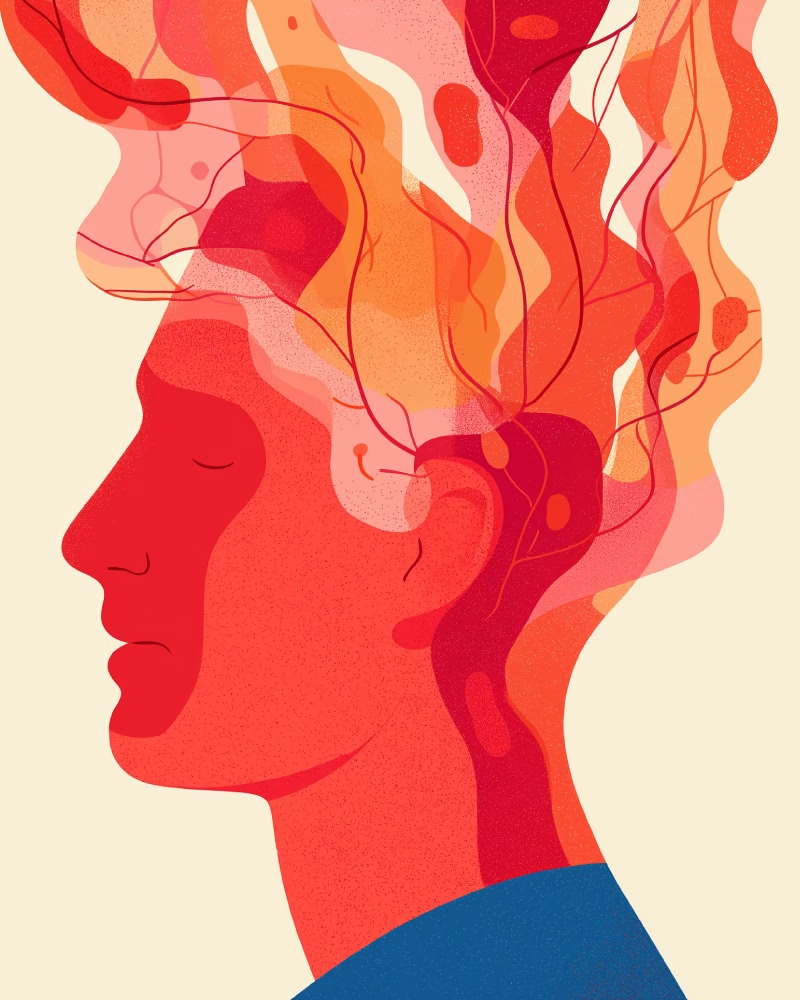
Light and Cellular Energy in the Brain
One of the most established theories behind photobiomodulation involves the mitochondria. Inside the mitochondrial energy system is an enzyme called cytochrome c oxidase. Red and near-infrared light can interact with this enzyme and influence the chain of reactions responsible for producing ATP.
ATP is essentially usable cellular energy. Neurons rely on it to maintain electrical activity, communicate with other cells, and carry out normal brain functions.
The review included a particularly interesting human study involving healthy adults over 60. Using specialized magnetic resonance imaging, researchers found a significant increase in ATP synthase activity in the brain following photobiomodulation.¹
This provides human evidence that light can measurably influence brain metabolism, not simply subjective feelings following treatment.
Supporting Blood Flow and Oxygen
Brain cells also need a steady supply of oxygen. Photobiomodulation may influence nitric oxide, a signalling molecule involved in relaxing blood vessels and regulating circulation.
Human studies included in the review found increases in oxygenated hemoglobin and other measures associated with cerebral blood flow and oxygenation. In some cases, these changes continued after the treatment itself had ended.¹
The emerging picture is interesting: photobiomodulation may influence both the energy being produced inside brain cells and the circulation supplying those cells with oxygen and nutrients.
Inflammation, Oxidative Stress and Brain Health
The brain has its own complex immune environment. Microglia and astrocytes help protect neurons and maintain the conditions they need to function. But when inflammatory activity becomes excessive or prolonged, it can contribute to cellular stress and neurological damage.
Across animal and laboratory studies, photobiomodulation was associated with reductions in oxidative stress and inflammatory signalling.
Researchers also observed effects involving brain-derived neurotrophic factor, or BDNF, a protein important for neuronal survival, learning, memory, and neuroplasticity.¹ These findings suggest that photobiomodulation may influence not only neurons themselves, but the broader cellular environment in which they operate.
Measurable Changes in Brain Activity
Some of the most fascinating findings come from human studies looking directly at brain function. Researchers have reported measurable changes in:
- Brain electrical activity
- Cerebral metabolism
- Functional brain networks
- Oxygenation and blood flow
- Attention and working memory
- Cognitive performance in some older adults¹
Studies using electroencephalography and brain imaging have recorded changes in brain-wave patterns and neural-network activity following photobiomodulation.
This does not mean photobiomodulation has been proven to prevent dementia or treat neurological diseases. It does, however, provide evidence that light can interact with biological systems fundamental to how the brain produces energy, communicates, and adapts.
A New Way of Looking at Light and the Brain
Perhaps the most exciting part of this research is not any single disease application. It is the increasingly detailed picture of what light may be capable of doing inside the brain. Photobiomodulation appears to interact with cellular energy production, circulation, inflammatory signalling, neuronal activity, and processes involved in neuroplasticity.
Those effects do not yet translate into a proven treatment for every neurological condition being studied. But they help explain why the brain has become one of the most active frontiers in photobiomodulation research.
🌿
We’ll continue following the science as researchers learn more about light, cellular energy, and brain function. Curious about photobiomodulation and whether it could complement your current care? Connect with the RegenClinic team. We’re always happy to answer your questions.
Call or text us at 250-208-4218
Email: hello@regenclinic.ca