Red Light Therapy Strengthens Muscles. But Not How You Think.
When we think about strength and endurance, we usually think about muscles. Train the muscle. Strengthen the muscle. Recover the muscle. It’s a straightforward model—and for the most part, it works. But a new study suggests that the story might be more complex than that.
A 2025 study explored how red light therapy (also called photobiomodulation) affects muscle performance under fatigue. At first glance, this isn’t new. Red light therapy has been studied for years in the context of recovery and performance. What makes this study different is where the effect came from. Not just the muscles. The gut.
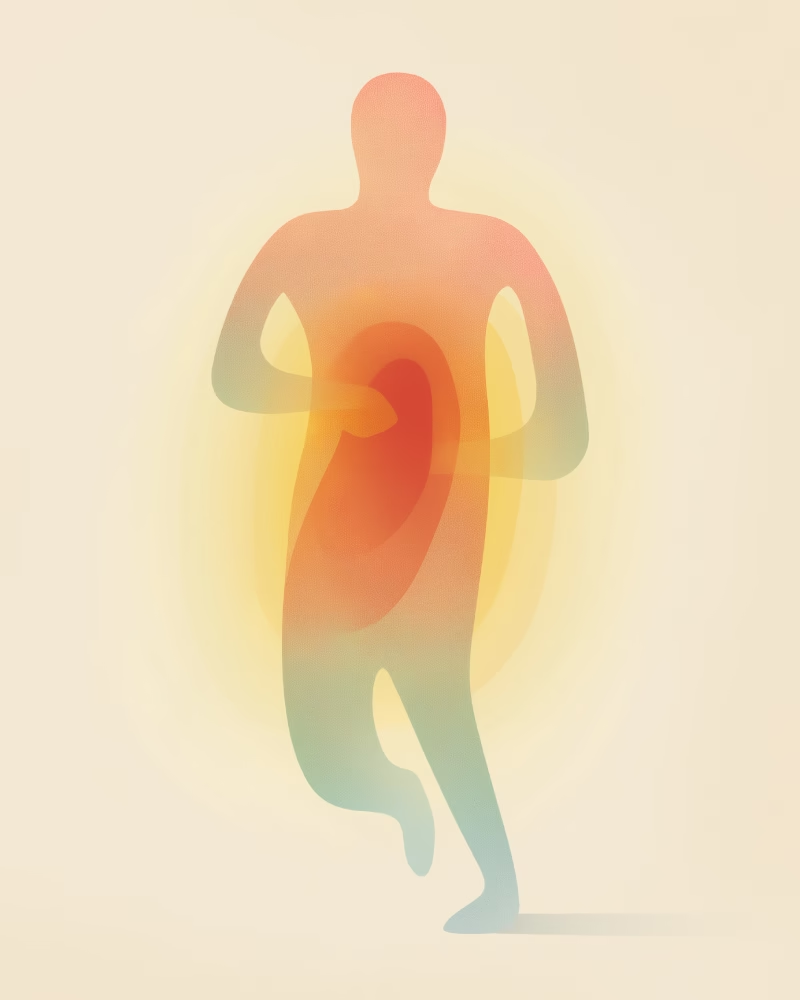
In the study, mice were exposed to near-infrared light in different ways: legs only, abdomen only, legs and abdomen combined.
They were then put through intense treadmill exercises. The results were surprising. Treating the legs alone had a modest effect on endurance. Treating the abdomen significantly improved performance. And combining both nearly doubled the time to exhaustion compared to the control group.
The researchers found that red light therapy influenced several key systems in the body through the gut. Specifically, it helped:
- Support and repair the intestinal lining
- Improve the balance of gut bacteria
- Increase beneficial metabolites like butyrate and carnitine
These metabolites play an important role in how the body produces and uses energy. They help support mitochondrial function—the part of your cells responsible for generating ATP, or cellular energy.
From Gut to Muscle
This is where the study becomes particularly interesting. Instead of acting only where the light is applied, the therapy appeared to trigger a chain reaction:
Light stimulates the gut →
The gut influences the microbiome →
The microbiome produces beneficial compounds →
Those compounds support mitochondrial energy production →
And that energy supports muscle performance
In other words, strength and endurance may not start in the muscle alone. They may begin in the systems that support energy throughout the body.
The study also observed:
- Lower lactate levels, suggesting reduced fatigue
- Healthier mitochondrial structure in muscle tissue
- Greater resistance to physical exhaustion
It’s important to be clear about what this study does and doesn’t show. This research was conducted in mice, not humans. While the results are promising, more research is needed to determine how these findings translate to human physiology and clinical outcomes.
Why This Matters
Even at this early stage, the study expands how we think about recovery and performance. Red light therapy may not be limited to local effects.
It may influence larger, interconnected systems in the body—particularly those related to energy production, inflammation, and metabolic health.
At RegenClinic, we’re always talking about healing on a cellular level. What this study suggests is that those cellular effects may be more systemic than we once thought. Not just muscle to muscle. But gut to muscle. System to system.
This is early research. It doesn’t change clinical practice overnight. But it does point to a future where therapies like photobiomodulation are understood not just as localized treatments, but as part of a broader, integrated system of care.
🌿
If you’re focused on staying strong, active, and capable over time, these are the kinds of developments worth paying attention to. Not because they provide all the answers today. But because they show where things may be going.
Call or text us at 250-208-4218
Email: hello@regenclinic.ca