Rotator cuff injuries—and how one athlete is using light to reclaim his game
For most athletes, pain is part of the story—but it doesn’t have to be the ending.
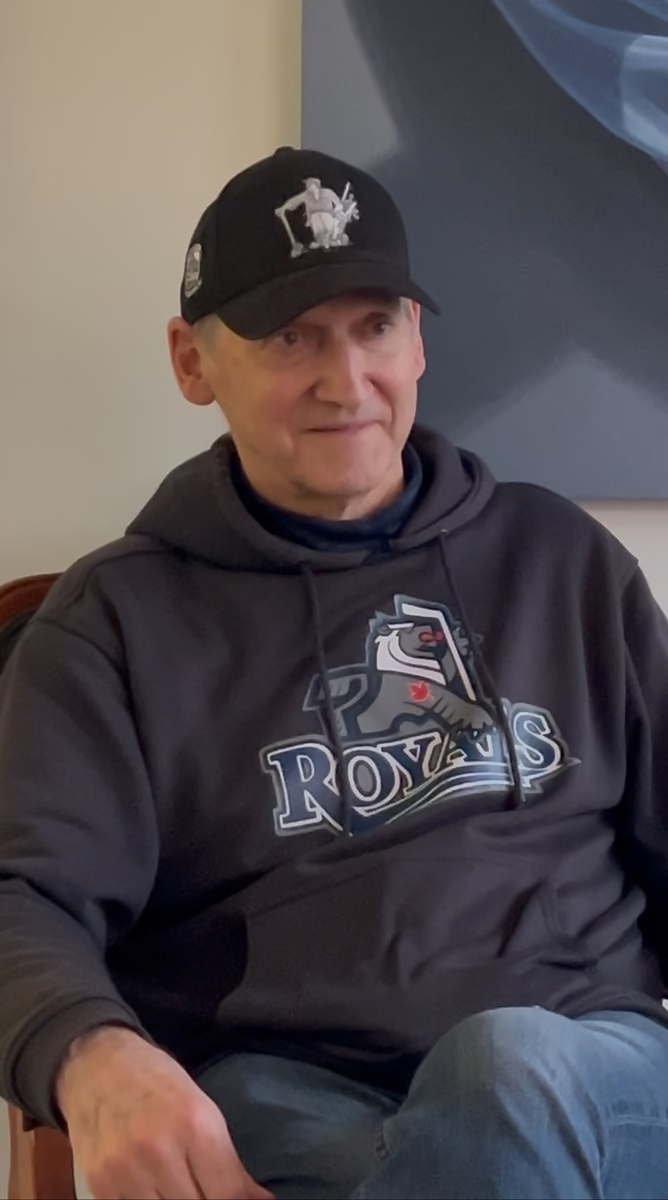
Steve, a 77-year-old racquetball player from Victoria, is proof of that. One of Canada’s best in his age group, he finished second in the 75+ division at last year’s national championships in Calgary. But even the best aren’t immune to wear and tear. Steve had been living with back pain for more than 17 years, and more recently, a rotator cuff injury that began to threaten his ability to play.
A friend told him about RegenClinic, where he met David for a focused laser and acupuncture session. After that very first treatment, Steve said his back pain was gone—something he hadn’t felt in nearly two decades. Since then, he’s had over ten treatments, this time focusing on his shoulder.
Steve’s commitment to his health matches his dedication to his sport. He arrives an hour early for every practice, warming up, stretching, and doing exercises to strengthen his back and shoulders. For him, staying active isn’t just about winning—it’s about preserving independence, mobility, and the joy of movement.
Understanding rotator cuff injuries
Rotator cuff injuries are one of the most common causes of shoulder pain, particularly in sports that involve overhead motion—like racquetball, tennis, and swimming. The rotator cuff is a group of four muscles and tendons that stabilize the shoulder joint and help lift and rotate the arm.
Over time, repetitive use can cause small tears, inflammation, and pain that limits range of motion. Left untreated, this can progress to chronic tendonitis or even partial tearing, making daily activities—from reaching into a cupboard to driving—painful or difficult.
Traditional treatment often includes rest, physiotherapy, and sometimes steroid injections. But emerging research shows that red light therapy—also known as photobiomodulation—can offer a non-invasive way to accelerate repair and reduce pain.
What the research says
A 2024 systematic review and meta-analysis published in the International Journal of Molecular Sciences examined data from 18 clinical studies on red light therapy for tendon injuries, including rotator cuff tendinopathy (PMCID: PMC12079619).
The analysis found significant reductions in pain and improvements in shoulder function and range of motion compared with placebo or standard physiotherapy. Red light therapy was also shown to decrease inflammatory markers—such as interleukin-6 and tumor necrosis factor-alpha—while increasing collagen synthesis and mitochondrial activity within the tendon tissue.
In practical terms, these cellular changes translate to faster recovery, reduced swelling, and stronger tendon remodeling, which helps prevent re-injury. The review also noted that outcomes were most effective when treatments were applied two to three times per week using wavelengths between 630 nm and 850 nm—precisely the range used by the THOR Photomedicine systems at RegenClinic.
This growing body of research continues to validate what many of our patients experience firsthand: when targeted correctly, light doesn’t just relieve pain—it helps the body repair itself at the source.
How we treat rotator cuff injuries at RegenClinic
At Regen, we follow the THOR Photomedicine protocol for rotator cuff injuries, using both LED and Laser Cluster probes to target key areas:
- The subclavicular lymph nodes to reduce inflammation and improve circulation
- The greater tuberosity (where the rotator cuff attaches to the bone) to promote tendon repair
- The C4–T1 spinal nerve roots and surrounding muscles to ease tension and trigger points
Acute injuries are often treated daily for the first few days, then several times a week as symptoms improve. Chronic cases—like Steve’s—are typically treated twice weekly for at least six weeks. Each site is treated for about a minute, with most patients describing the light as warm, gentle, and deeply relaxing.
Many patients notice improvement after just a few sessions: less pain, smoother movement, and better sleep from reduced discomfort.
Healing that restores more than movement
Every recovery story looks different—but the goal is always the same: to restore what pain once took away. Whether that’s swinging a racquet, gardening, or simply lifting your arm without hesitation, healing means regaining the freedom to move with confidence.
If you’re dealing with shoulder pain or a rotator cuff injury, know that you don’t have to give up the activities that make you feel alive. The Regen team is here to help you heal, strengthen, and keep doing what you love.
Call or text us at 250-813-2121
Email: sasha@regenclinic.ca